Showing posts with label Time. Show all posts

Saturday, July 5, 2014

P.S. -- I'm home

I have been putting off this post for weeks now.

I really did intend to share pictures of my time in southern India...
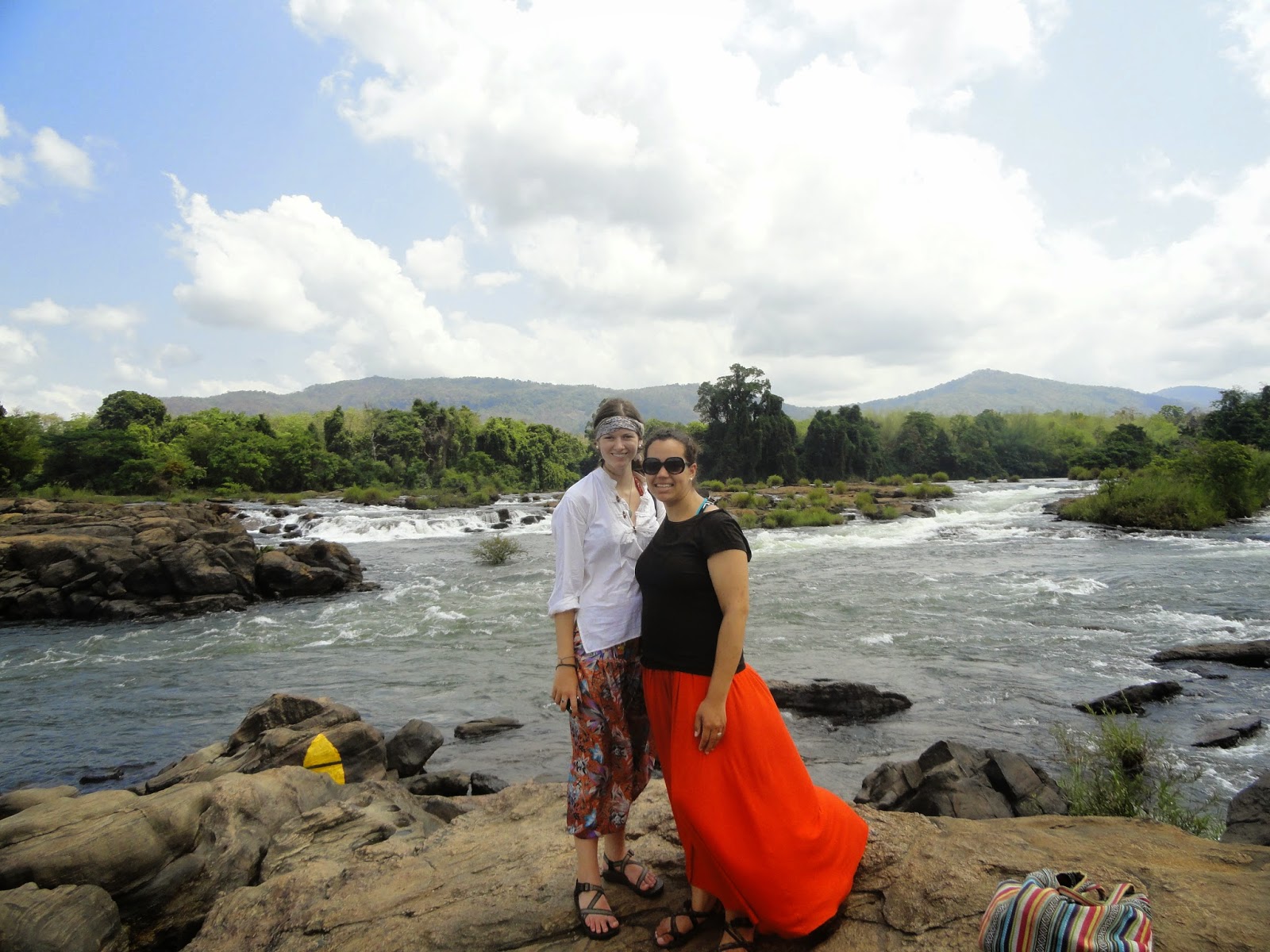

and a brief stop in Singapore...

and a lovely week in the Philippines...

but then it didn't happen.

I let myself be overwhelmed by time changes, international flights, reunions with family and pets, packing/unpacking, and trying to establish myself back in the United States. I gave myself permission to reflect at whatever pace felt most comfortable.

I didn't want to write until I felt like I could say something that would appropriately represent this experience.

And because there aren't any words to fully capture or express my time in Nepal, it's July and people think that I'm still trapped on a camel in Rajasthan. So I'd like to apologize for misrepresenting my return to the United States, I made it back safely... about ten weeks ago. While I don't know how to write in a way that I feel satisfactorily represents the last year, I am getting better about doing it in person. If you are interested in hearing more let me know. I'd love to go out to coffee or even make another attempt at crafting momos in an American kitchen.

Grace and peace,
Rachel

Wednesday, March 26, 2014

How Was Nepal?

From March 10, 2014

How was Nepal?
And how were the last eight months of your life?

I don’t mean to be rude, but if you ask me this question I probably won’t answer. It’s just too hard. It’s too much information, too much complexity, too much everything to consistently and repeatedly verbalize. Plus it’s not all the happy, rosy, wonderfulness that is expected in those two second conversations as you pass someone in the parking lot.

But I understand that the question comes from a genuine place and today, sitting back at home after my last day of school, I’m in the mood to try and speak the past eight months of my life.


How was Nepal? Nepal was this…


Nepal was disorganized and lopsided.
Nepal was vibrant and fragrant and beautiful.
Nepal was handpicked for me by a group of children whose faces in my eyes are chased by tears because today I said goodbye and I don’t know if I’ll see them again.
Nepal was precious and delicate. Probably not how I would have designed it, but infinitely more meaningful because of that.
Nepal was a lot of weeds.
Nepal was overwhelming and too much to take in all at once. But I desperately want my memories to maintain their truth, even as the experience itself wilts and this season closes.
Nepal was Dipika, Sunita, Sajan, Asmita, Karan, Postraj, Bijay, Niran, Sarmila, Parbati, Dipa, Numa, Sunder, Roshni, Sapana, Sabina, Sangita, Rashmee, Sumanta, Namrata, Arjun, Suraj, Dipesh, Saswot, Hira, Shila, Sushma, Laxmi, Bimala, Dipraj, and Pawan.
Nepal was singing with class one, doing puzzles with class two, learning to whisper in class three, practicing the months of the year rapid-fire with class four, and wishing class five would stop yelling.

Nepal was walking to school and covering my face with a scarf
when a truck left me inside a tunnel of thick, cancerous, smoke.
 
Nepal was being caught by surprise when the mountain peaks were suddenly whiter and brighter after new snow.
Nepal was milk tea.
 
Nepal was me giving handshakes and high-fives and hugs at the gate. Nepal was my students going round and round in the line instead of leaving after the first goodbye. Nepal was me not even caring and perhaps even wishing they would never stop.
Nepal was biting my tongue and smiling through a salty, facial monsoon while my students told me not to cry or be so “sadly.” Nepal was me not even being able to correct their English, but only standing there sniffling.
 
Nepal was me walking home with the most beautiful bouquet of flowers
I will ever receive and realizing I have to come back.


Friday, November 22, 2013

Spontaneous Holidays and Unexpected School Days

Perhaps one of the most challenging parts of teaching in Nepal is knowing whether or not the school will be open on a particular day. I have basically always taken it for granted that school would follow the calendar published months in advance, with an occasional but widely announced change due to a snow day or two. That is not how it happens here.

Don't assume that February and March will actually include that much school,
it's just too early to know about the unexpected stuff.

I live with another teacher from my school and the headmaster of another local school, so if anyone should be in the know about whether or not school is running, it’s me. But that hasn’t really been my experience. Here is a quick guide to determining whether or not school will be open based on my diligent observations and questioning in a desperate search for answers:

1. Be sure to say “see you tomorrow!” to everyone you encounter at school. Hopefully one of the dozens of students and teachers will pipe up if it has already been determined that school will be closed the following day.

2. Don’t count too strongly on strategy number one. It probably works 50% of the time.

3. Try to make friends with people who are well-connected to the grapevine. This provides access to rumors about upcoming bandhs or poorly publicized local holidays that are approaching. Any kind of a rumor, no matter how seemingly ridiculous, is enough to indicate that school may or may not be closed.

4. Don’t spend too much time asking people. When confronted directly with the question “Is there school tomorrow or not?” in English or in Nepali, most will say “there may be school tomorrow.” Which is a frustratingly vague answer.

5. Definitely don’t try to get an answer the night before. It’s too early. No one knows.

6. In the morning, check with your host family. Questions like “are you going to school today?” generally receive a more informative answer than “is there school today?” Even though it would seem like within three hours of school starting a decision would be clear. If you don’t get a clear answer, check back in 45 minutes; kind of like shaking a magic 8 ball until it gives you what you want.

7. If on the way to school you pass an entire soccer field full of students from grade three, don’t assume this means that school is closed. Simply make a note that class three will be smaller than usual.

8. When in doubt, take everything with you to school on the assumption that even though less than half of the staff have showed up the school will still run and you will suddenly be in charge of way more classes than normal. At least the student numbers will also be running below half so even when the headsir says “you take grades one AND two” the class size won’t be terribly overwhelming.

9. Even if school is running, don’t assume that it will be a full day. Assume that any adult approaching your classroom, at any time during the day, is coming to announce that everyone is leaving at 12:00 or 1:30 or right now. NOTE: DO NOT listen to older students who deliver the same message, always wait for a credible adult who you can identify if later asked “who told you to let all the grade ones go running out the gate?”

10. Laugh. Go with the flow. Bat away a single tear as the time you were going to use to teach that great new game with rhyming words is snatched out from under you. Enjoy the six kids who actually showed up – be sure you know their names and give them an extra star just for coming when no one else did. Sigh as you develop a deeper understanding of why teachers in Nepal are frustrated beyond belief and have no interest in lesson/unit planning. Why plan for a day that may or may not happen? Force a smile when you walk past the seven teachers enjoy their leisure period outside while you run between classes wondering how there can possibly be any spare adults on a day like today. Take the long way home when the day ends three hours early. Buy yourself a pack of oreos at the grocery store to remind yourself that somewhere in the world things are different. Then eat a huge plate of daal bhat to remind yourself that you’re in Nepal whether school runs today or not.

Thursday, October 17, 2013

Reach the World

Towards the end of August, I received an invitation to participate as a travel correspondent for an organization called Reach the World. The full description of the program is below, but essentially Americans travelling in foreign countries volunteer to write two articles per week on topics like tradition, food, transportation, or the environment. These articles are published to the RTW website where students and teachers can access what quickly becomes an up-to-date travelogue from hundreds of locations across the globe. Each traveler is also matched with a single classroom and will correspond with that group of students more personally from messages to video-conferences.  

Reach the World (RTW) is a global education non-profit based in New York City. Since 1998, RTW has been cultivating relationships between young students and volunteer world travelers through an innovative program of online journalism and face-to-face interactsions. Over the past 15 years, RTW has directly served 16,000 students and 800 teachers in under-served communities.

Reach the World’s mission is to help elementary and secondary school students and teachers to develop the knowledge, attitudes, values, and thinking skills needed for responsible citizenship in a complex, culturally diverse and rapidly changing world. The program hopes to address two major problems faced by youth in under-served communities: the narrowing of the curriculum, forcing out subjects other than literacy and mathematics; and the unequal access to technology tools. Through a standards-based program of web-based journalism, videoconferencing and collaborative project-making, RTW students go on virtual journeys with global mentors and engage in hands-on learning within the classroom. Global competence surveys reveal that in the process, RTW students are expanding their worldviews and developing an understanding of global citizenship.

Um…non-profit encouraging global competence and appreciation for diversity. It took me all of three seconds to know that this was a program I definitely wanted to be involved in. As much as I hope that some of what I teach my Nepali students will have an impact, deep down I believe that where my greatest potential lies is in bringing back artifacts, anecdotes, and pictures that can make the world come alive for my future students in the United States. Anything I can do as a teacher to help kids realize that there is more to the world than just their town, city, state, country; and that all of the other people out there matter just as much as the ones here… that’s what I want to be doing.


This picture has nothing to do with RTW. It's just a photo that I like.
I took it in Nagarkot and the people silhouetted are the other ETAs I was with.
 
Anyway, I applied and was accepted. So now I teach English to grades 1-5 six days per week, run afterschool intervention groups for struggling students Sunday-Tuesday, lead a poetry club for 7-9th graders on Thursdays, take Nepali lessons twice a week, do teaching workshops for the staff at my school on Fridays…and write two articles per week for Reach the World. Perhaps that explains why my blog posts have been a little bit sparse lately. Despite being busy, I love everything and I wouldn’t give any of it up (well except maybe class 3 after a really hard day!)

If you are interested in learning more about RTW you can visit their general website at reachtheworld.org. From there you can access three hundred journeys that are currently on-going from Nepal to Germany to South Africa and beyond. Below are some specific links to my articles.

 
Already Published…

·          Autobiography

·          Logbook #1: Godavari


·          Journal: Festival Season


Coming Soon…

·          Logbook #2: Nagarkot

·          Field Note: What is daily life like in Nepal?


**If you are a teacher and you would like more information about using RTW in your classroom, or connecting with a traveler, check out the general information on the website and then use the links on the homepage to get in touch with a RTW staff person. Same goes for international travelers interested in sharing their journey with students in the U.S.**